Insulation, steps and the well
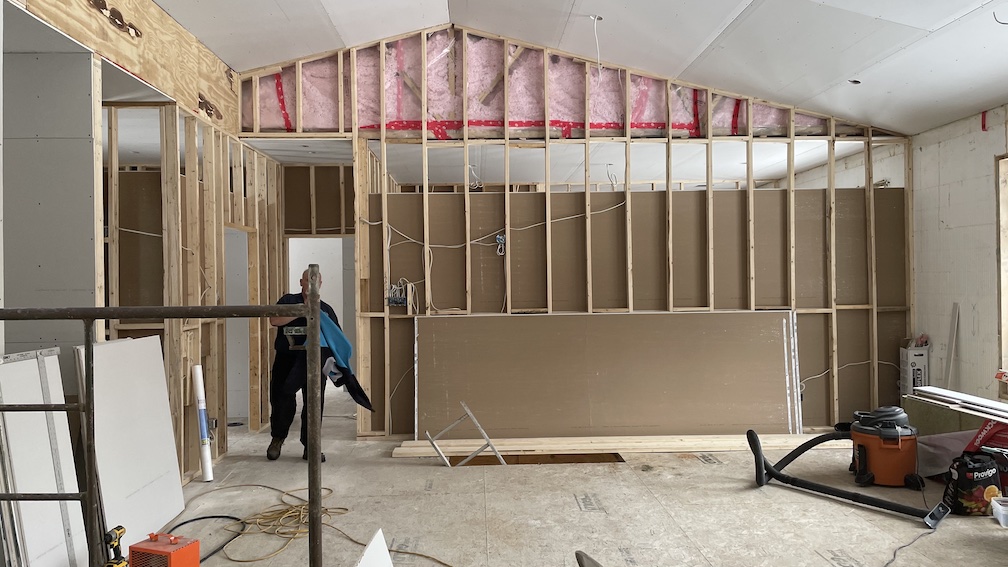
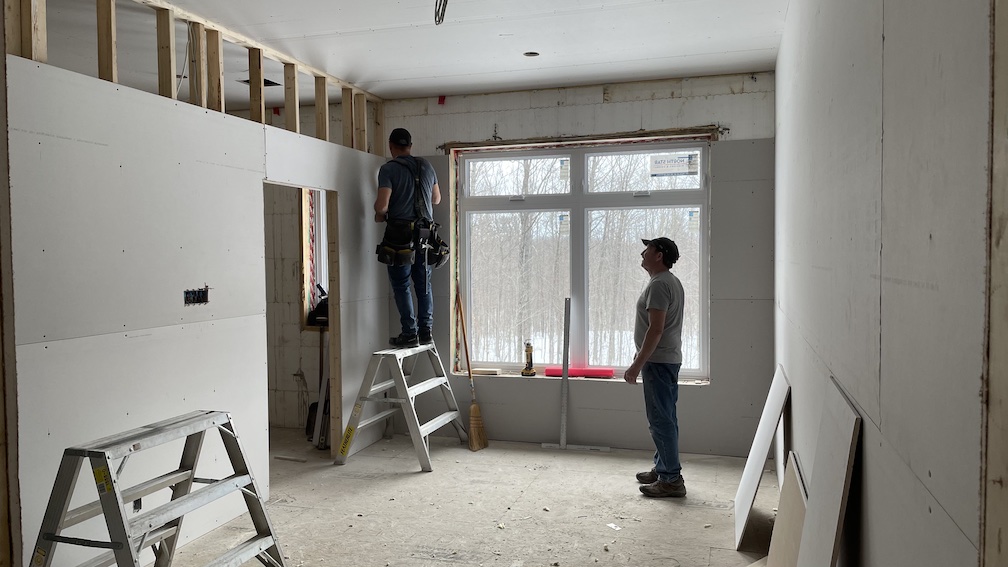
Mid-February was rather mild, and provided a good opportunity to do the insulation. This was done while the main floor drywall was completed. The house was then cosily warmed by the single heater in the basement.
One day Robbie came by to pick up some equipment and had lunch with Dennis, John, Richard and me. He regaled us with tales of a local entrepreneur who, among other ventures, has “bought up Main street in Alexandria”. He has long hired Robbie’s team to do quick renos on what should be tear downs. The town turns a bit of a blind eye to code inadequacies given that rental units are in short supply. Pragmatic politics country style.
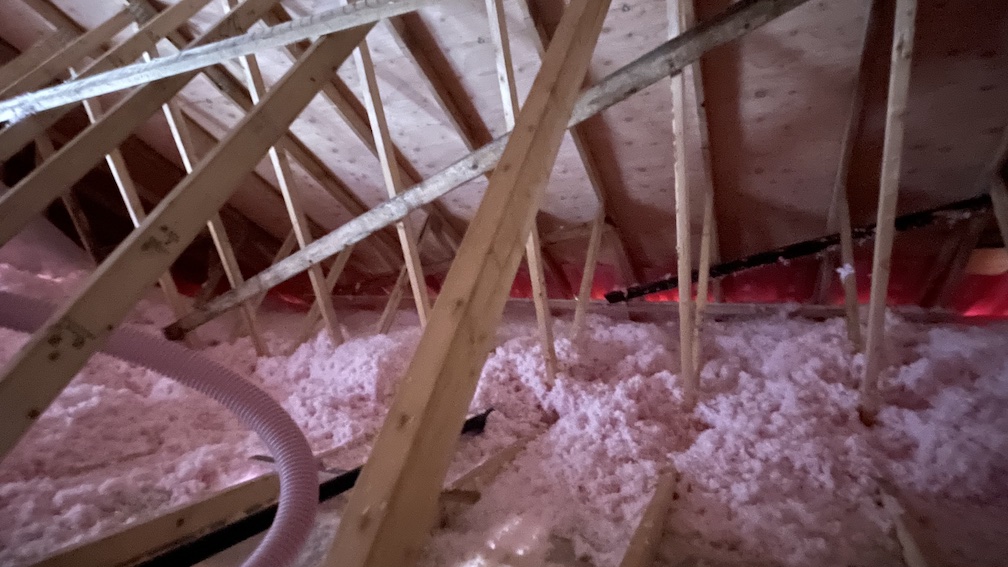
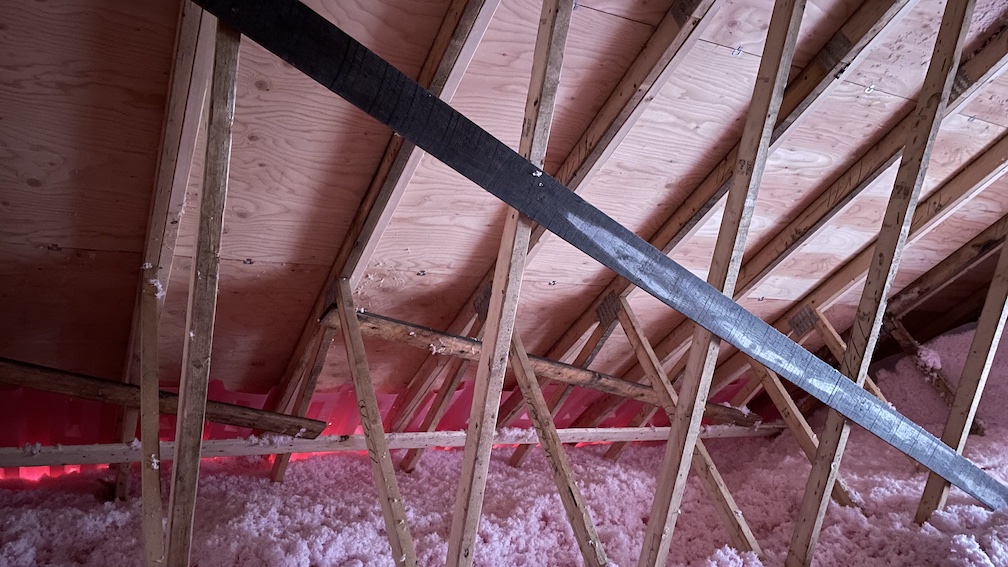
The roof had to be inspected before the insulation could be done. Some bracing was required. It had been missed in the build. We had to have the building inspector explain exactly what was needed. When I finally figured it out, the inspector said many contractors miss it, given that the requirement is obscure and the bracing counterintuitive. Dennis was baffled, but we complied and even added more bracing than required in places that appeared to him to be actually useful. After that we did the Attic Cat routine. I was feeding the machine and Dennis was up in the rafters blowing it in. It took a couple of days.





It was time to press on. Dennis got some wood for temporary steps — some new 2 x 10s for stringers and scraps for the treads. I decided to ask Jason, the plumber, for the well guy’s phone number to see if I could get any traction. Dennis and I also strategized about the HVAC and how to move that along. In all cases we had luck.
Prior to this, we had to finish the garage bracing and insulation. This did get done, with Dennis spending many hours straddling the trusses. Now, it is possible to drywall the garage and bring some of the stuff in storage to the house. We aim to do the first phase of the move by the end of March.
As March approaches, I am a less skittish about leaving late. Working on the garage insulation and steps took Dennis and me past the 3 pm, pre-rush hour return I’ve done during the deep winter. I had to wait till past 5 pm to leave to be on the other side of rush hour. The later sunset and mild weather permitted me some time to walk in the back yard after Dennis left for the day. The relative warmth made the snow curl precariously off the roof while simultaneously making the snow more dense and easy to snowshoe. I made it towards the back of the property and discovered a solitary, very large eastern white pine which likely sits on the eastern boundary. A spectacular specimen that I was able to keep in sight all the way back to the house, and then spot through the living room window. It is about 3/4 of the way to the back of the property, and provides a sense of the depth of the land.


Dennis assembled the temporary steps. Joe had come by to pick up the bender that had been left in the garage. He stopped into the house to see what was going on. He noticed the steps and said to Dennis, “How long did that take you? 4 weeks?” Dennis said, “4 hours”. They look good, feel solid, and seem like they’ve always been here, but they will be replaced at some point in the summer.


Jason told us a number of times that he notified the well guy, but he never came. When I called, the fellow immediately set a date with me. It turned out that he was a bit confused, because they did another house for Jason on Beaupré Road and thought he meant this one. It also turns out that they drilled wells for 3 of the 4 neighbours around us. I asked about the 2 closest neighbours on our side of the road. They said they drilled to 80 and 90 feet so that there should be no problem here. I was worried because the well at another neighbour, a little further off the road to the west, was 125 feet deep and the water was wretched., requiring extensive treatment. They were unperturbed.
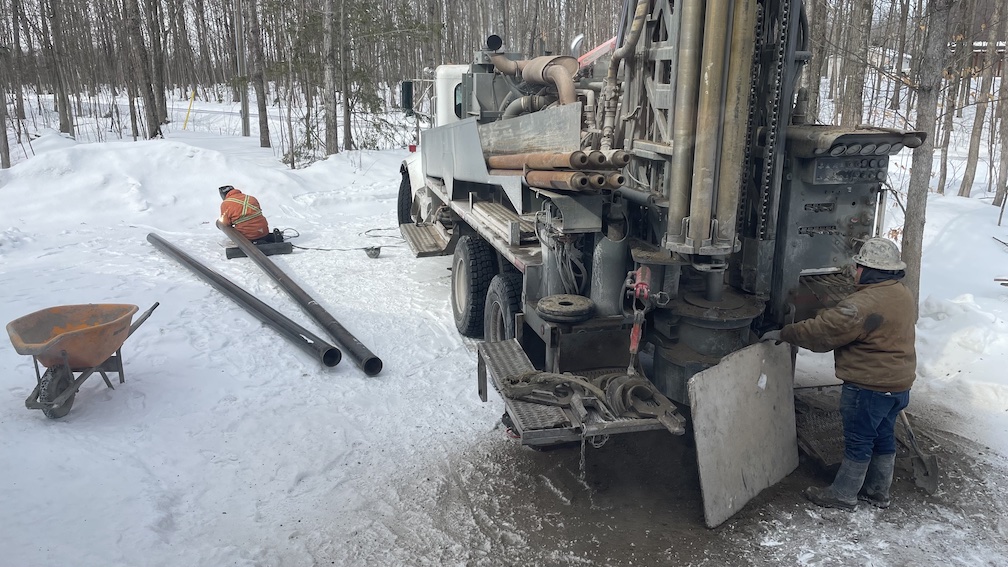
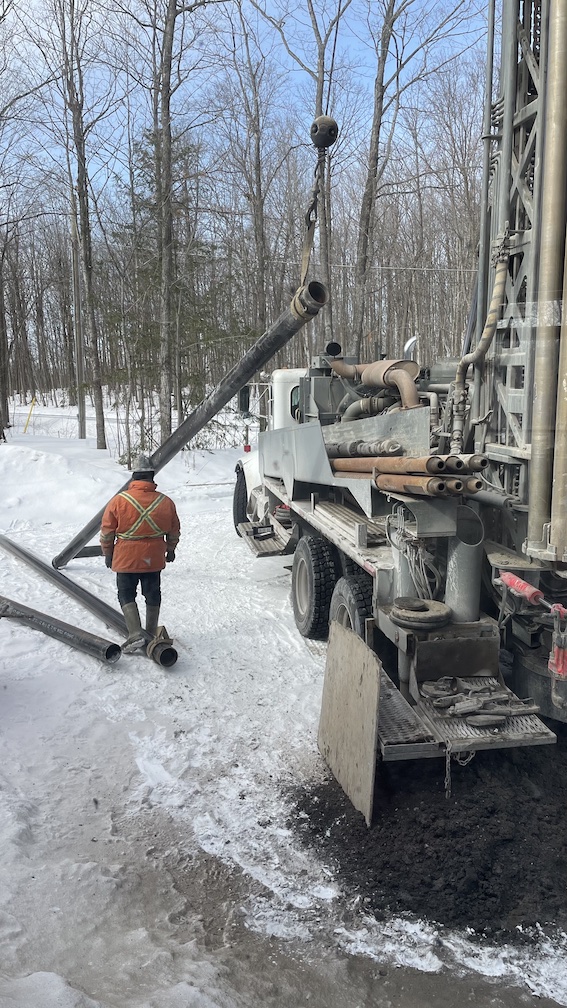
They arrived at 11, and it took about 20 minutes to select a spot to dig with me and then set-up. About an hour of drilling before lunch got them down to around 40 feet. Soon after lunch, they hit bedrock at 54 feet and set steel pipes into the hole to be embedded in the rock. Some mud was already starting to show. They continued to dig from within the pipe and soon enough water was coming out. The driller looked at me with a thumbs up. He later told me he dug to the minimum depth of 80 feet and the flow was 50 gallons a minute. No issues for water supply.
They packed up the drill truck and proceeded with level and supply tests. This entails pumping out water to see how much the level drops and then how long it takes to return to it stable level and flow. This lasted about an hour. Throughout, the level barely dropped, when the pump was turned off, it took all of a minute for the stable levels to return. The second fellow said if all wells were like this, they’d never have headaches. It turns out that house they confused with this one had sand problems and they had to bring in special equipment to stop the sand from clogging the vein. Nothing like that here, even though he said things are so unpredictable, that we may have dug 15 feet away and found no water. Four and a half hours from arrival, the well was done.
As the water was pouring out, I felt it with my hand and it seemed soft, but that’s improbable. It will likely need softening to remove the iron. I was expecting a heavy sulphur smell, but I didn’t notice anything. Very anxious to run it in the house to see to how much it stains. For certain, we’ll call for treatment. No matter. I am relieved.



The well was one of two large infrastructure components left to be undertaken. Connecting it to the inside pipes is big, but not at the same level and expense. The last component is the HVAC system. A few weeks ago, Robbie set us up with Neil, his go-to for heating and cooling. It turns out that he’s the only HVAC contractor interested in air-to-water heater pumps, the system that Dennis and I were pursuing from the start. He’s just developing his experience with this technology and is happy we might adopt it in a year of two. In the meantime, he’s willing to install an electric boiler and air handler to do both hydronic infloor heating and water heated forced air.
Unlike most HVAC contractors, Neil’s reaching to move with the trends and is open to negotiating with us for a system that can work. We’re meeting to set up the installation to take place over the next 2 weeks. Once done, we can really start focussing on the finishing: drywall, joints, paint, flooring, water connections and cupboards. Hard to believe the opportunity to stay the daytime may not be too far away.
