Site Development

An entrance into the land was required to get anything started. Just before Christmas 2020, an excavator came and cleared the driveway and deposited some large gravel. Took half a day.

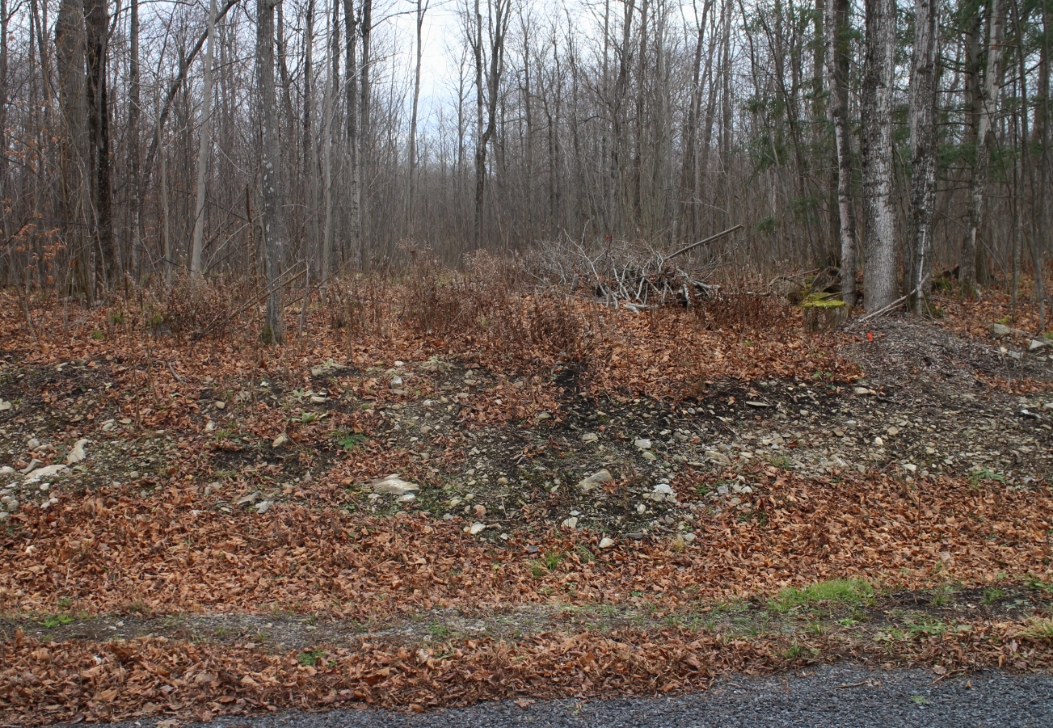
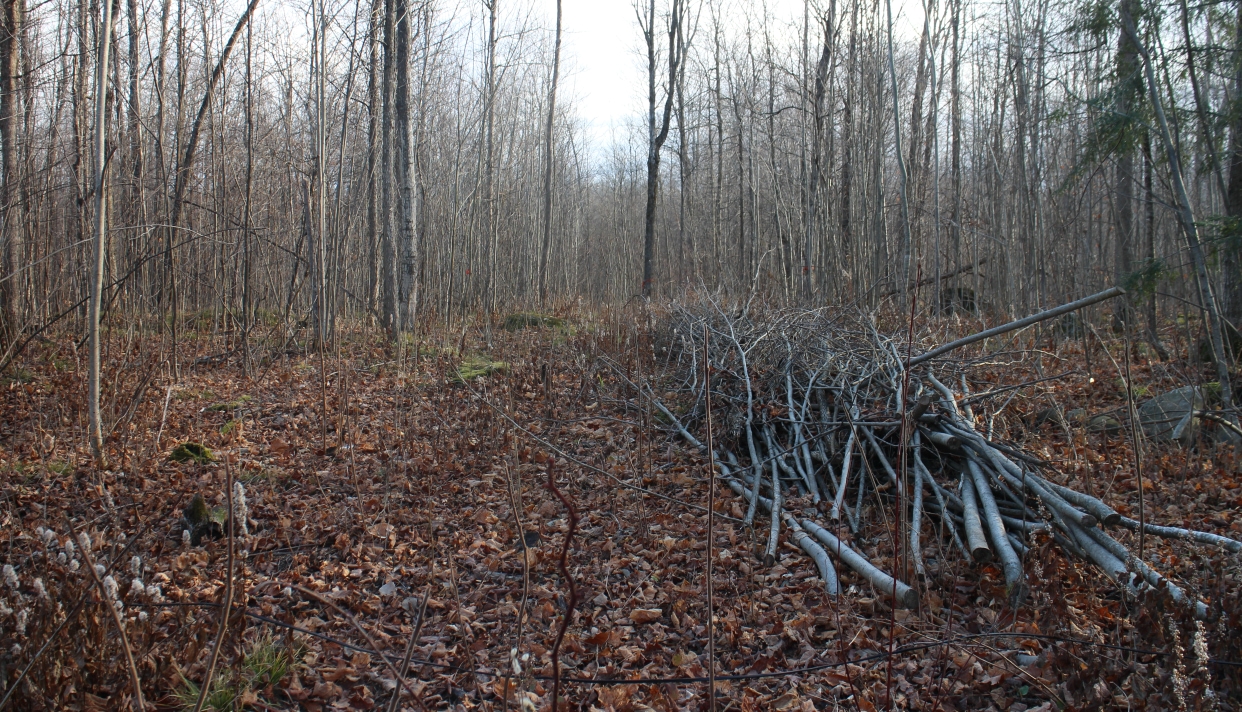

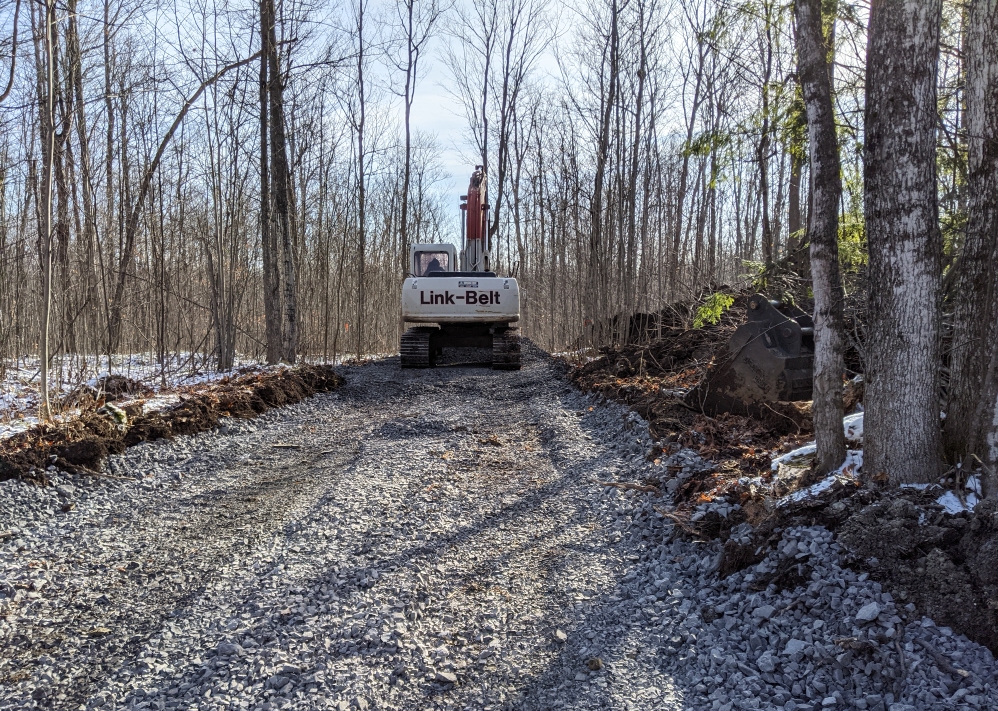

Dennis and Jane came down one day to check out the land. Dennis and I marked out the general area where the house and garage would be. Later on, in the early spring of 2021, the septic designer came to measure and later drew the plans for the septic system. This provided the dimensions of the entire area to be cleared, and made it possible for me to draw up the site plan for the building permit application.

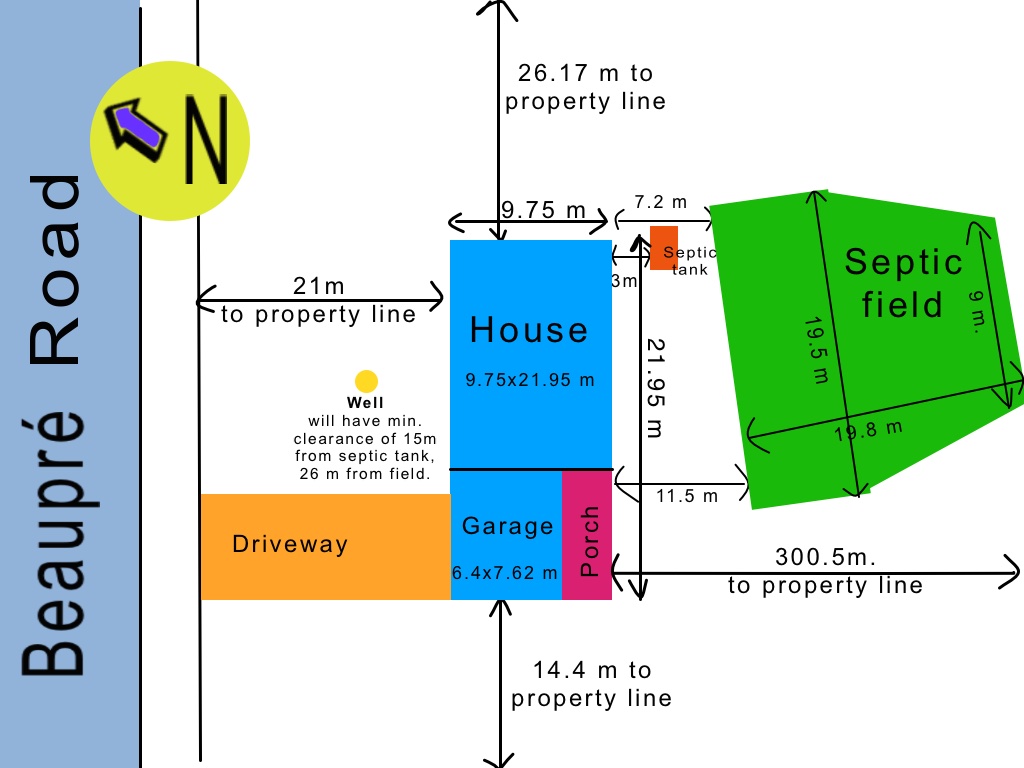
An opening of 170 ft [52 m] by 100 ft [30 m], or approximately 0.4 of an acre had to be hacked away to provide space for a small front yard, the house and garage with space to walk around them, as well as the entire septic system: tank, weeping bed and sand berm. To take advantage of the slope for the purposes of having a walk out basement and to rely on gravity for the septic operation, the house needed to be setback approximately 60 feet from the front, 10 feet beyond the minimum. The back of the entire building site ends approximately 2/3 of the way down the slope.
The start: saplings and and hand tools.
Starting meant facing innumerable saplings, from tiny whips to 3-4 inch diameters, right off the cleared driveway. My tools included two lopers, one manual, one battery operated, and a reciprocating saw with a pruning blade. Mosquito and tick repellant clothing completed the gear. i worked for a number of hours 2-3 days a week. Progress was slow, but steady, and it was satisfying work.


During the summer, we had seen a wattle fence in South Frontenac. The saplings could provide a great deal of material for us to assemble our own.


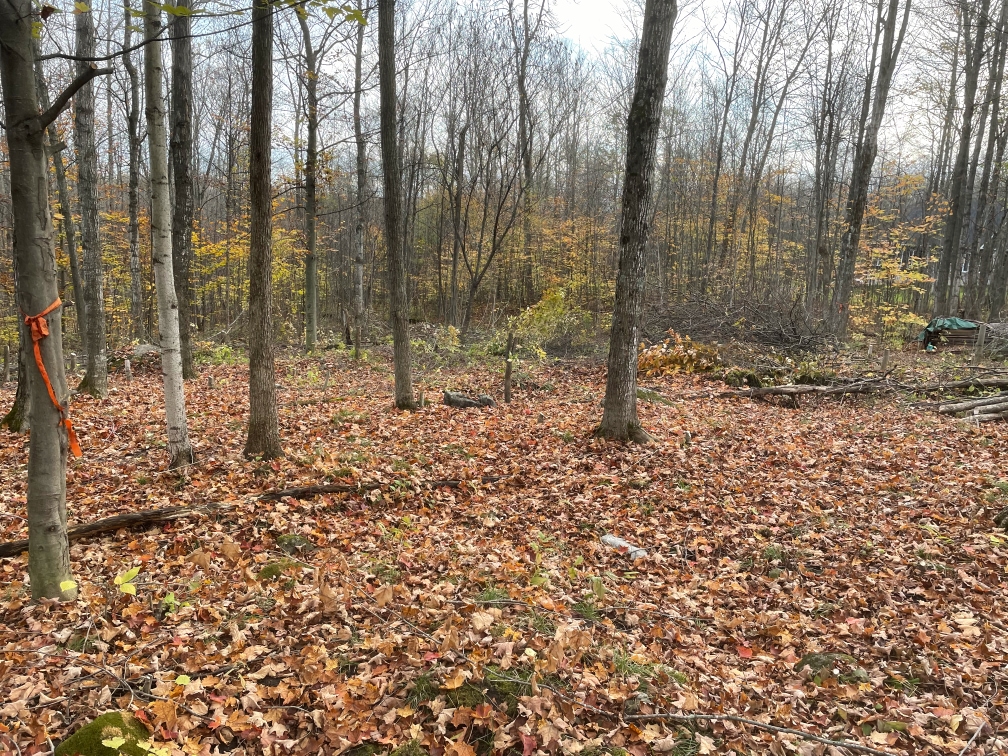


The big stuff: chainsaw and backhoe
The clearing of saplings with small hand tools took place in the fall of 2021. In early May 2022, the heavy equipment came in. Dennis brought his chainsaw and Gilles sent Glenn along with the backhoe. Glenn is a virtuoso with this machine as Dennis is with his. Things went flawlessly. Together they cut the bigger trees, and then Glenn removed the stumps and piled these, along with the trunks, off to the side. Dennis and I cut the crowns.
Afterwards, Glen levelled the muddy ground as much as he could. They removed what they thought were the essentials, but having studied the septic designer’s drawing, I felt there was more to do. I had cleared what I thought were the correct dimensions. It was later when Gilles came by and took measurements that we were able to confirm another session would be required.

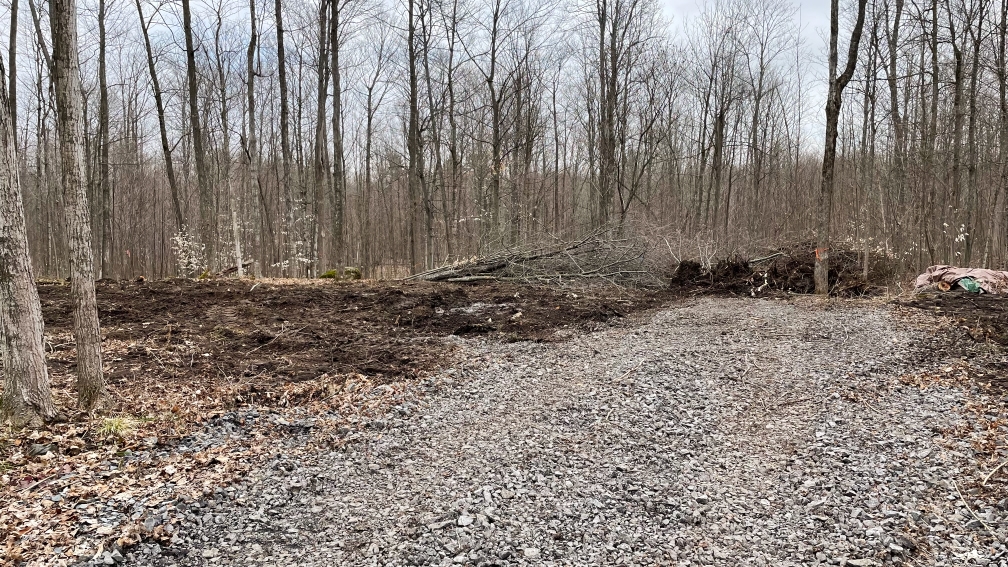
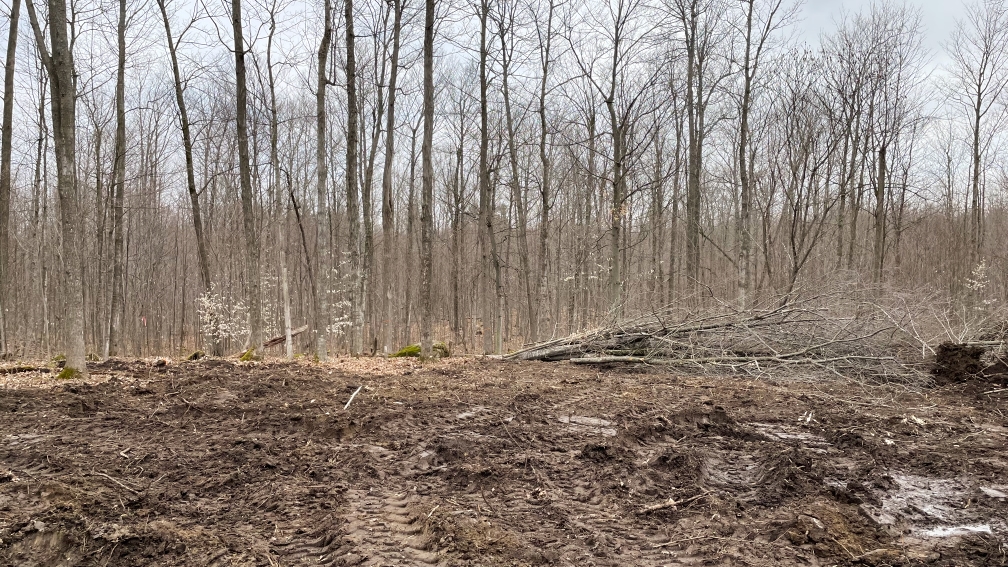
Big stuff part 2
Glenn and Dennis returned in late May to finish off the remaining trees. These were identified by the markers Gilles had left, and they pretty much reflected the area I had cleared of saplings. By this time, the trusses had arrived and were pushed off to the side, out of the way for excavation.
Most of the remaining trees were substantial, but quick work was made of them. The branches, logs and stumps were pushed to the western edge of the clearing. The latter will have to be trucked away or buried. The branches chipped or burned — hopefully the former. Despite everyone’s skepticism; that the logs are of a sufficient size, I hope to find some way of turning the bigger ones into lumber.


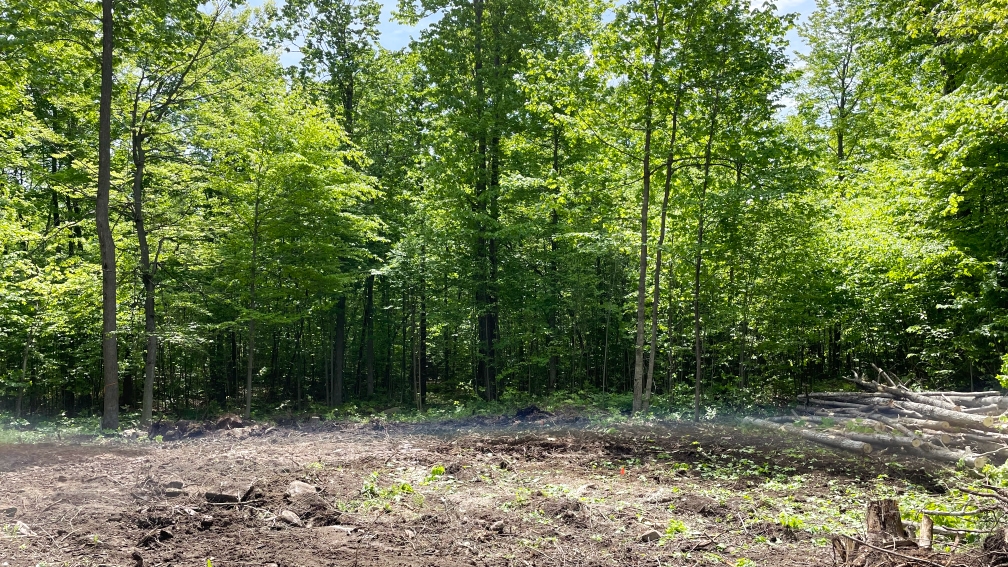


Perhaps, the largest tree to come down was a basswood, a soft deciduous tree, something the folks, here, disparage as lumber. Nevertheless, I’ll try to persuade someone. The clip below is a great example of Dennis’s and Glen’s teamwork. Kind of wondrous and sad to see this giant fall so majestically.
With the site cleared up, it was time to move to the septic. Given the slope, the septic system had to be installed first. This delayed the start of the build, but provided its own interesting show.